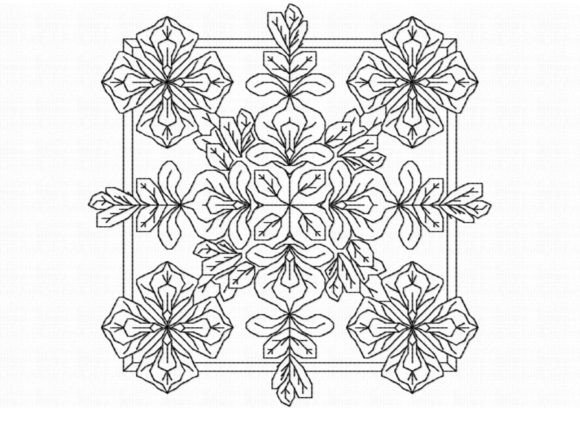
Blackwork Square: A Designer's Real-World Review
As a designer who spends countless hours evaluating machine embroidery designs for both personal projects and client work, I approach every new file with a critical eye. The market is flooded with generic patterns, but finding a versatile asset that truly elevates a handmade product is rare. Recently, I tested the Blackwork Square, a design categorized under Backgrounds, to see if it lives up to its promise of effortlessly enhancing items from homeware to shopper bags. Here is my honest assessment of how this embroidery file performs in real-world scenarios.
First Impressions: Mood and Visual Personality
When I first loaded the Blackwork Square into my digitizing software, the visual impact was immediate. Unlike many busy floral or abstract backgrounds that can overwhelm a garment, this design offers a structured, geometric elegance. The blackwork style inherently suggests a sense of tradition mixed with modern minimalism. It creates a mood that is sophisticated yet grounded. For a small business owner looking to create a cohesive brand identity, this square shape provides a perfect frame for logos, monograms, or standalone decorative elements on custom apparel.
The layout is clean, avoiding the chaotic stitch directions often found in lower-quality files. This clarity is crucial when you are planning a finished product where precision matters. Whether you are aiming for a high-end boutique look or a rustic craft fair aesthetic, the design adapts well. It feels less like a random pattern and more like a deliberate design choice, which significantly boosts the perceived value of the item.
Testing the Design: From Tote Bags to Throw Pillows
To truly understand the utility of the Blackwork Square, I imagined—and then executed—a few specific project scenarios. My primary test was a heavy canvas tote bag intended for a local artisan shop. In this context, the square acts as a bold anchor point. When stitched in a contrasting thread color against the natural canvas, the design pops without needing excessive density. It transforms a plain carrier into a statement piece, proving its worth as a tote bag design element.
I also considered its application on home textiles, specifically kitchen towels and throw pillows. Blackwork has historical roots in linens, making it a natural fit here. On a linen napkin or a cotton pillow cover, the fill stitch and running stitch details of the square add texture that invites touch. For an Etsy seller creating holiday gifts, this design offers a timeless alternative to seasonal motifs. A simple white towel with a subtle Blackwork Square in charcoal grey feels premium and giftable year-round.
Furthermore, I evaluated its potential for sweatshirt embroidery. Placing the square on the chest or sleeve of a heavyweight hoodie adds a graphic tee vibe but with the tactile quality of thread. It works exceptionally well as a personalized gift base; imagine placing a recipient's initials inside the square or using the square as a border for a short phrase. The versatility allows it to function as both a background and a focal point.
Navigating Challenges: Fabric and Placement Considerations
While the Blackwork Square is robust, it is not without limitations that any professional must consider. One critical factor is the fabric texture. On highly textured fabrics like chunky knits or thick terry cloth, the fine lines of the blackwork style might get lost. The design relies on clear definition, so smooth surfaces like denim, cotton poplin, or twill are ideal. If you are working with stretchy fabrics, such as jersey for baby clothes, you must use the correct stabilizer to prevent the stitches from distorting the square's geometry.
Another consideration is the hoop size. Since this design comes in three distinct sizes, you must verify which version fits your specific project constraints. Attempting to force a large version into a small 4x4 hoop will result in poor registration and broken threads. Conversely, using the smallest version on a large area might make the detail too tiny to appreciate from a distance. Always check the dimensions before committing to a commercial embroidery run.
Density is also a factor. Blackwork designs can sometimes be dense. If you are stitching on thin fabric, there is a risk of puckering. I strongly recommend testing the design on scrap fabric first to gauge the stitch density. You may need to adjust the tension or reduce the density slightly in your machine settings to maintain a flat finish, especially for items that require frequent washing, like aprons or tea towels.
Strategic Value for Craft Businesses and Makers
For the craft business owner, the Blackwork Square represents more than just a pattern; it is a tool for brand consistency. Using this design across various products—embroidered patches, caps, and digital mockups—creates a recognizable visual language for your shop. Customers begin to associate that specific square motif with your brand, increasing recognition and trust.
In the realm of digital product sellers, this file serves as excellent content for printable mockups or preview images. Even if you aren't selling the physical item, showing how the design looks on a printable mockup can drive sales for your other assets. It demonstrates professionalism and attention to detail, which are key drivers for buyer engagement on platforms like Etsy or Shopify.
However, always confirm licensing terms before using any digital embroidery file for commercial purposes. Ensure you have the right to sell finished goods containing the design. Some licenses restrict the number of items you can produce or prohibit reselling the file itself. Clear understanding of these terms protects your business from legal issues down the line.
Practical Designer Notes for Success
To get the most out of the Blackwork Square, follow these practical steps:
- Test Stitch First: Never skip the test run on a similar fabric to your final project. Check for skipped stitches or tension issues.
- Color Contrast: While "blackwork" implies black thread, experimenting with deep navy, forest green, or burgundy can create unique variations while maintaining the design's integrity.
- Stabilizer Selection: Use a cutaway stabilizer for stretchy fabrics and a tear-away for stable wovens to ensure the square remains crisp.
- Hoop Verification: Double-check that the selected size fits comfortably within your hoop without crowding the edges.
- Mockup Comparison: View the design in both light and dark fabric backgrounds to ensure visibility and aesthetic balance.
The Blackwork Square is a solid addition to any designer's library. It bridges the gap between traditional technique and modern application, offering a reliable way to elevate handmade products from ordinary to exceptional. Whether you are decorating a single baby blanket or launching a line of branded merchandise, this design provides the structural beauty needed to make your work stand out.