Mama Bear: A Professional Embroidery Design Review
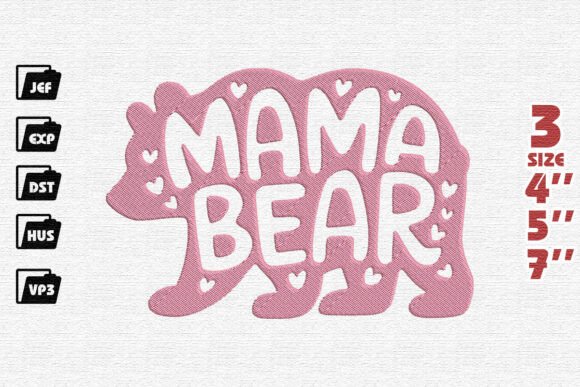
As an experienced embroidery designer who has spent years curating design assets for small business owners, I approach every new file with a critical eye. We are not just looking for something cute; we are looking for viability in the real world of commercial production. Today, I am reviewing the Mama Bear design, a machine embroidery file positioned within the Mother category. The product description promises to "bring a hint of elegance to your fabrics" while remaining "playful" and offering a "lively, quirky touch." For a boutique owner, a café manager, or an Etsy seller building a brand around warmth and care, this sounds promising. But does it hold up under the scrutiny of professional application?
First Impressions: Balancing Elegance and Quirk
The first thing that strikes me about Mama Bear is the duality of its aesthetic. In the crowded marketplace of digital embroidery files, many designs lean too heavily into the cartoonish or become overly ornate. This design attempts to walk the fine line between elegance and playfulness. When visualizing the finished product on a high-quality cotton tote bag or a linen apron, the silhouette appears friendly yet structured enough to convey professionalism.
For a small business creating small business merch, this balance is crucial. If a design is too childish, it undermines the perceived value of the product. If it is too stiff, it fails to connect emotionally with customers seeking handmade goods. Mama Bear seems to hit the sweet spot, making it a strong candidate for brands that want to project a nurturing, approachable identity without sacrificing style. It feels like a design that could elevate a simple t-shirt into a premium gift item.
Strategic Applications for Branded Merchandise
When integrating a new design into a product line, versatility is key. Here is how I envision Mama Bear performing across various applications for your business:
- Embroidered Patches: This is perhaps the most versatile use case. Creating a standalone patch allows you to apply the design to denim jackets, backpacks, or even as a detachable accessory for hats. The playful nature of the bear makes it an excellent conversation starter for event merchandise or customer loyalty gifts.
- Staff Uniforms and Aprons: For a bakery, florist, or pet boutique, apron embroidery featuring Mama Bear can instantly humanize your staff. Placing the design on the chest pocket creates a focal point that reinforces your brand identity as warm and welcoming.
- Cap Embroidery: While caps present unique challenges due to their curved surface, a well-designed Mama Bear logo could serve as a subtle accent on the front panel or side of a baseball cap. This works particularly well for outdoor brands or family-oriented businesses.
- Tote Bag Design: Totes are the canvas of the modern eco-conscious consumer. Stitching this design onto a sturdy canvas tote transforms a utility item into a statement piece. The "quirky touch" mentioned in the description aligns perfectly with the aesthetic of independent boutiques.
- Product Packaging Accents: Consider using the design on fabric labels attached to handmade soaps, candles, or knitwear. This adds a tactile, premium feel that printed tags simply cannot achieve.
Critical Considerations for Production Success
While the concept is strong, moving from a digital file to a physical product requires careful planning. As a designer, I must advise caution regarding specific technical aspects to ensure the final result meets your quality standards.
Size and Detail Constraints
One of the most common pitfalls in commercial embroidery is scaling a design too small. The description notes the design is perfect for items needing a "lively touch," but if you attempt to shrink Mama Bear for a tiny sleeve detail or a small patch, the intricate details may get lost. High stitch density in a small area can lead to puckering or thread breakage. Always test the design at your intended size before committing to a full run. If the outlines are too thin, they may not pull through dense fabrics cleanly.
Fabric Texture and Stabilizer Choice
The success of any machine embroidery design depends heavily on the substrate. On smooth fabrics like poplin or twill, Mama Bear will likely look crisp. However, on textured fabrics like fleece, terry cloth (towels), or heavy knits, the texture can interfere with the stitch definition. You must select the appropriate stabilizer. For towels or thick apparel, a cut-away stabilizer is essential to prevent distortion during washing. Never skip this step, as it directly impacts the longevity of your branded merchandise.
Thread Color Contrast
To achieve the "hint of elegance" promised by the product description, color selection is paramount. Using thread colors that closely match the background fabric will cause the design to disappear. Conversely, overly neon threads might clash with the elegant vibe. Test swatches are non-negotiable. Ensure the contrast is sufficient for visibility from a distance, which is vital for brand identity recognition in a retail environment.
Impact on Brand Identity and Customer Trust
In the realm of custom apparel and handmade products, consistency builds trust. When a customer sees the same high-quality Mama Bear design on your staff's aprons, your tote bags, and your packaging, it creates a cohesive visual language. This consistency signals professionalism and attention to detail.
Furthermore, embroidery inherently suggests durability and quality. Unlike screen printing, which can crack over time, a well-executed embroidered patch or logo ages gracefully. By choosing a design like Mama Bear, you are associating your brand with these positive attributes. It tells the customer that you invest in long-lasting materials and thoughtful design, which can justify a higher price point for your goods.
Practical Designer Notes for Implementation
Before you purchase the digital embroidery file and begin production, follow these steps to mitigate risk:
- Test in Black and White: Before worrying about thread colors, stitch out a test version in black thread. This reveals issues with spacing, jump stitches, and overall structure without the distraction of color.
- Verify Hoop Size: Check the dimensions of the design against your machine's hoop capabilities. If the design is larger than your standard hoops, you may need to reposition the workpiece, which can affect alignment.
- Create a Printable Mockup: Use software to generate a realistic mockup of the design on your actual product. Show this to your team or clients for approval before spending money on thread and labor.
- Check Licensing Terms: Ensure you have the correct commercial license. Some embroidery files are sold for personal use only. Confirm that the terms allow for unlimited production for sale, especially if you plan to sell the finished goods on platforms like Etsy or Amazon.
- Inspect Stitch Density: Look at the digitized file if possible. Areas with extremely high stitch counts may require slower machine speeds to prevent birdnesting or thread breaks.
Final Verdict
The Mama Bear design offers a compelling mix of charm and sophistication suitable for a wide range of commercial embroidery projects. It is an asset that can breathe life into handmade products and add a personal touch to corporate uniforms. However, its success relies entirely on proper execution. By respecting the limitations of scale, choosing the right fabrics, and adhering to professional stabilization techniques, you can transform this digital file into a tangible symbol of your brand's warmth and quality.
For the small business owner looking to differentiate their merchandise in a competitive market, Mama Bear is a worthy contender. Just remember: the design is only half the equation. Your expertise in bringing it to life is what truly matters.